The Weeknd's vocals are smooth, polished and lush: a voice moving easily into falsetto, layered with doubles and harmonies, surrounded by a big, glossy space that feels inspired by 80s pop. Here's how to build a similar sound on your own vocal.
We're not affiliated with The Weeknd or his team. This describes how to approach a similar sound, based on what you can hear on the records.
What you're hearing
- Smooth, natural pitch correction, not the snapped rap effect.
- Falsetto and head voice, doubled and harmonised.
- A warm, polished tone with a soft, sweet top end.
- Big, lush space: bright plates and halls, tempo-synced delays, sometimes a chorus shimmer.
- Control. The vocal is even and close, even inside all that space.
Step 1: Record the stacks
- Record close (15 to 20 cm), dry, with a pop filter.
- Record the lead, then two tight doubles of the hooks and key lines.
- Record harmonies separately, especially on falsetto parts.
See how to record vocals at home for room and level tips.
Step 2: Gentle tuning
- Key and scale: the song's real key.
- Retune speed: slower and natural, around 20 to 50 ms, so notes glide into place.
- Humanize: some, so long notes keep their life.
Step 3: EQ for warmth and polish
- High-pass around 80 to 100 Hz.
- Cut boxiness around 300 to 500 Hz if needed.
- A little presence around 3 kHz, gentle.
- Soft air: a shelf from 10 to 12 kHz, then de-ess.
The vocal EQ cheat sheet explains each range.
Step 4: Smooth compression and warmth
- Compression: gentler than rap. 2:1 to 3:1, medium attack, smooth release, 3 to 5 dB of gain reduction, then a slow leveller to even out the phrases.
- Saturation: tape-style warmth, subtle.
- De-ess after the top-end boost.
For the details, read our vocal compression settings guide.
Step 5: The lush space
- Reverb: a bright plate or hall, 2 to 3.5 seconds, with 20 to 50 ms of pre-delay. High-pass it around 300 to 500 Hz.
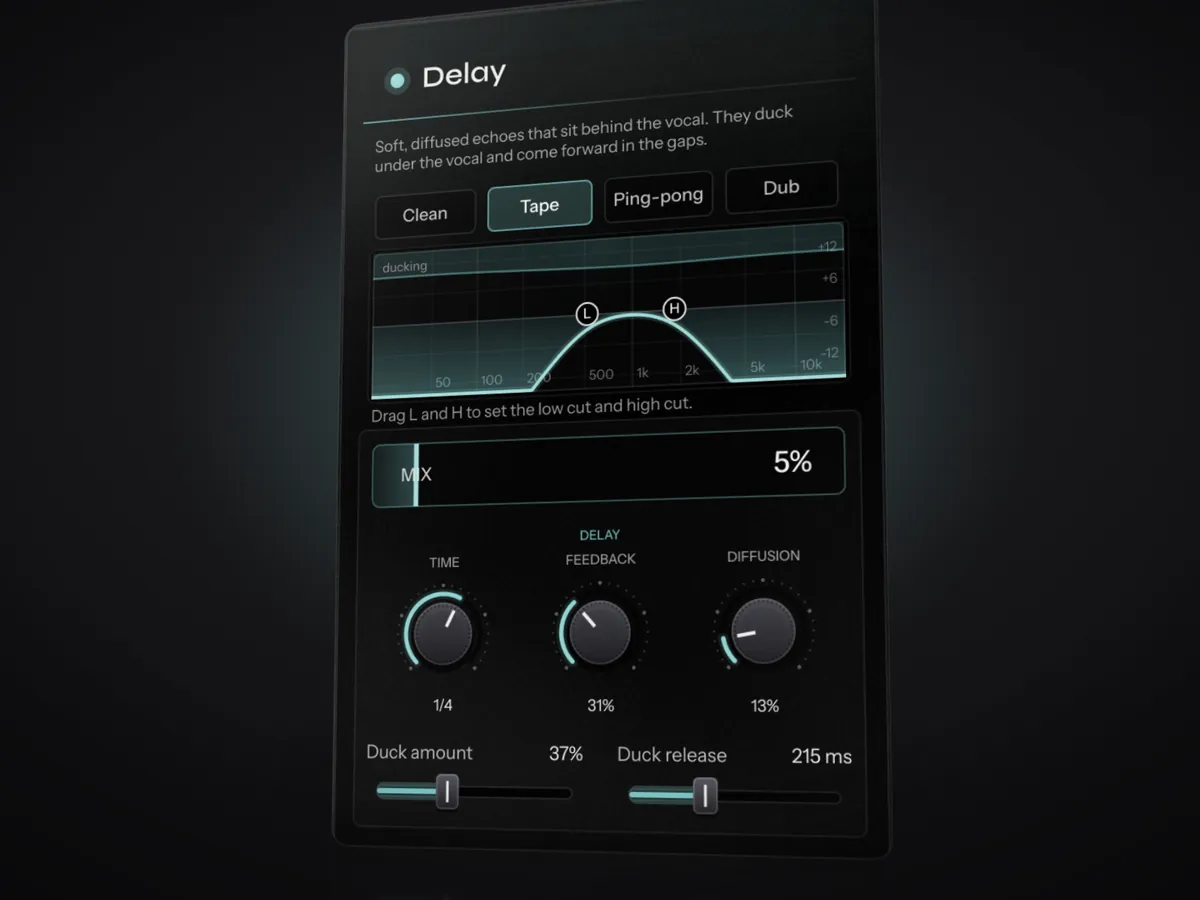
- Delay: tempo-synced 1/4 or dotted 1/8, filtered, a little feedback.
- Chorus: a gentle chorus on the reverb return or on the doubles for 80s shimmer.
- Ducking: duck the reverb and delay under the lead so the words stay intimate.
Step 6: Stacks and harmonies
- Pan doubles left and right, keep the lead centred.
- Keep harmonies a few dB under the lead and a little brighter and thinner.
- Send the stacks to the same reverb so everything sits in one space.
A quick starting point with Instinct
Instinct sets up the core chain from your recording: EQ, compression, de-essing, saturation, width, delay and reverb, with the effects ducked under the vocal. For this style:
- If you sing in key, Tune switches on by itself. Keep the retune speed natural.
- In the Reverb module, pick Plate or Hall and raise the mix a little.
- Use the Width module for a soft, detuned double.
Download the free beta and hear it on your own vocal.
Common mistakes
- Hard tuning. This style wants smooth, not snapped.
- Unfiltered reverb that clouds the low-mids.
- Stacks too loud. They should support the lead, not compete with it.
FAQ
Does The Weeknd use autotune?
Pitch correction is common on modern pop records, but his sound isn't the hard, snapped effect of melodic rap. For this style, use a slower, more natural retune speed so the vocal stays smooth and human.
How do I get the 80s reverb sound on vocals?
Use a bright plate or hall with a few seconds of decay and some pre-delay, add a tempo-synced delay, and filter both. A gentle chorus on the effects or the doubles adds the 80s shimmer.
How do I make falsetto vocals sound fuller?
Stack them: record two or three tight takes of the falsetto parts, pan the doubles, add gentle compression and a little saturation, and let a filtered reverb glue them together.