A good rap vocal is clear, loud and steady: every word lands, it sits on top of the beat, and it doesn't sound harsh at high volume. Here's the chain we use, in order, with settings to start from. Every vocal is different, so treat the numbers as a starting point, not a rule.
The chain at a glance
- Cleanup (noise, clicks, breaths)
- Pitch correction (optional)
- EQ
- Compression (stage one)
- De-essing
- Saturation
- Compression or limiting (stage two)
- Delay and reverb on sends
Step 1: Clean up the recording
- Remove background noise between phrases with a gate or by cutting the regions. Set it gently so it never chops words.
- Lower loud breaths rather than deleting them all; some breathing keeps it human.
- Fix clicks and pops before anything else, because compression will make them louder.
Step 2: Pitch correction (optional)
Many rap vocals are left untuned. If the verse is melodic, or you want the effect, set the song's key and a medium-fast retune speed. If it's straight rap, skip it.
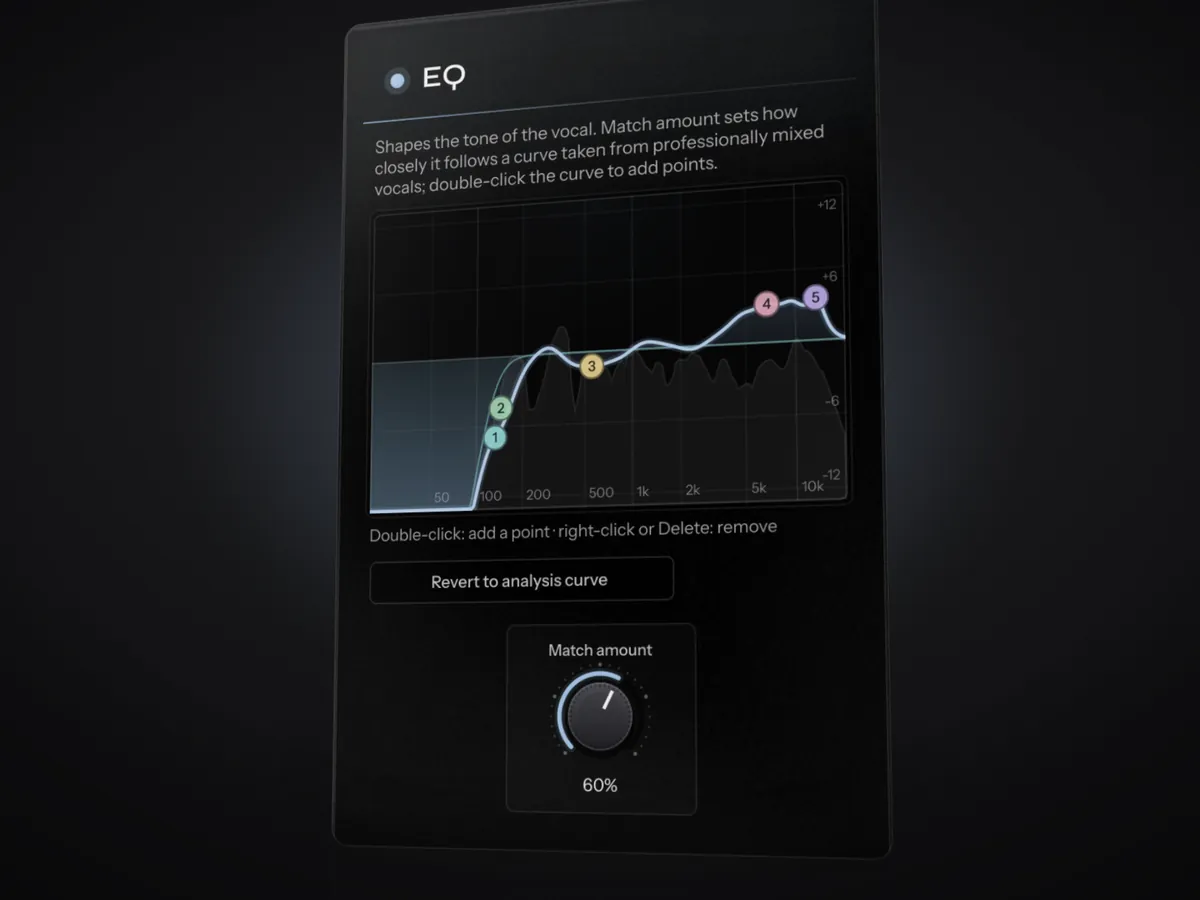
Step 3: EQ
- High-pass around 80 to 120 Hz to remove rumble and plosives.
- Cut mud around 200 to 400 Hz if the vocal sounds thick, boxy or "in a closet".
- Tame honk around 800 Hz to 1.5 kHz if it sounds nasal.
- Add presence around 3 to 5 kHz so the words cut through the beat.
- Add a little air with a shelf from about 10 kHz for a modern, polished top.
Use narrow cuts and wide boosts. For every range explained, see the vocal EQ cheat sheet.
Step 4: Compression, stage one
Rap needs consistent level so every syllable reads.
- Ratio: 4:1
- Attack: 5 to 15 ms (faster for more control, slower to keep the punch of the consonants)
- Release: 50 to 100 ms, or auto. It should recover between words, matching the pace of the flow.
- Gain reduction: 4 to 8 dB on the loud parts.
For a deeper look at ratio, attack, release and serial compression, see our vocal compression settings guide.
Step 5: De-essing
Compression and presence boosts make S, SH and T sounds louder. Add a de-esser around 5 to 8 kHz and aim for 3 to 6 dB of reduction on the esses only.
Step 6: Saturation
A touch of tape or tube saturation adds harmonics, so the vocal sounds fuller and louder at the same level. Keep it subtle, or blend it in parallel for more attitude.
Step 7: Compression or limiting, stage two
A fast compressor or limiter catching the last peaks (2 to 3 dB) makes the vocal feel locked in place and lets you push it up without spikes.
Step 8: Delay and reverb
- Delay: a 1/8 or 1/4 note delay, filtered (high-pass around 300 Hz, low-pass around 4 to 6 kHz), low in the mix. Automate it up on phrase endings for throws.
- Reverb: a short plate or room (0.8 to 1.5 seconds), filtered the same way, just enough to give depth.
- Ducking: duck both under the vocal so the words stay dry and clear.
Make it sit in the beat
- Turn the beat down, not the vocal up. Check the vocal level against the beat at a low volume.
- If the vocal disappears in a busy beat, cut 1 to 2 dB around 3 kHz on the busiest instruments.
- Check on headphones, car speakers and a phone. Rap is mostly heard on small speakers.
Do it in seconds with Instinct
Instinct was built around this exact chain. Put it on your vocal, press play, and it listens for a few seconds before setting up EQ, two compressors, de-essing, saturation, width, delay and reverb for that recording, including a compressor release matched to the spacing of the syllables. One ring sets how much, with the output level matched so louder never just sounds better. See how Instinct analyses a vocal, or download the free beta.
Common mistakes
- Too much low end. Rap vocals don't need much below 120 Hz.
- Over-compressing with a slow release. The vocal pumps and loses energy.
- Harsh top end. Boosting presence and air without de-essing after.
- Too much reverb. It pushes the vocal behind the beat.
FAQ
What is the best vocal chain order for rap?
A reliable order is: cleanup (noise and breaths), EQ, compression, de-essing, saturation, a second compression or limiting stage, then delay and reverb on sends. Tuning, if you use it, goes first.
How do I make rap vocals sit on top of the beat?
Control the level with two stages of compression, add presence around 3 to 5 kHz, keep effects subtle, and make room in the beat with a small cut in the same range on the busiest instruments.
Should rap vocals have reverb?
Usually a little. A short plate or room, filtered and kept low, adds depth without pushing the vocal back. Delay throws on phrase endings often work better than lots of reverb.